Terrain Adaptability
Built for complex outdoor and industrial terrain, balancing flat ground speed with slopes, stairs, and obstacle crossing.

LUD
A Wheeled-Legged robot platform built for complex terrain and real-world task environments, combining wheel-leg switching, self-balancing, self-righting, dual wireless communication, and multimodal perception with strong mobility, payload capacity, and continuous operating capability.
Built for complex outdoor and industrial terrain, balancing flat ground speed with slopes, stairs, and obstacle crossing.
Uses reinforcement-learning control to maintain balance across varied surfaces and impact conditions, with self-righting after a fall.
One platform combines high-speed wheeled motion with legged terrain adaptability, enabling fast mode changes by task.
Improves maneuverability in tight spaces and complex paths, helping the robot reposition efficiently during real tasks.
Supports both Wi-Fi and RF communication, with RF range reaching up to 1500 meters.
Compatible with optical cameras and uses dual LIVOX MID-360 plus Intel RealSense D435i sensing for broader environmental awareness.
Key parameters, perception configuration, and power capability at a glance.
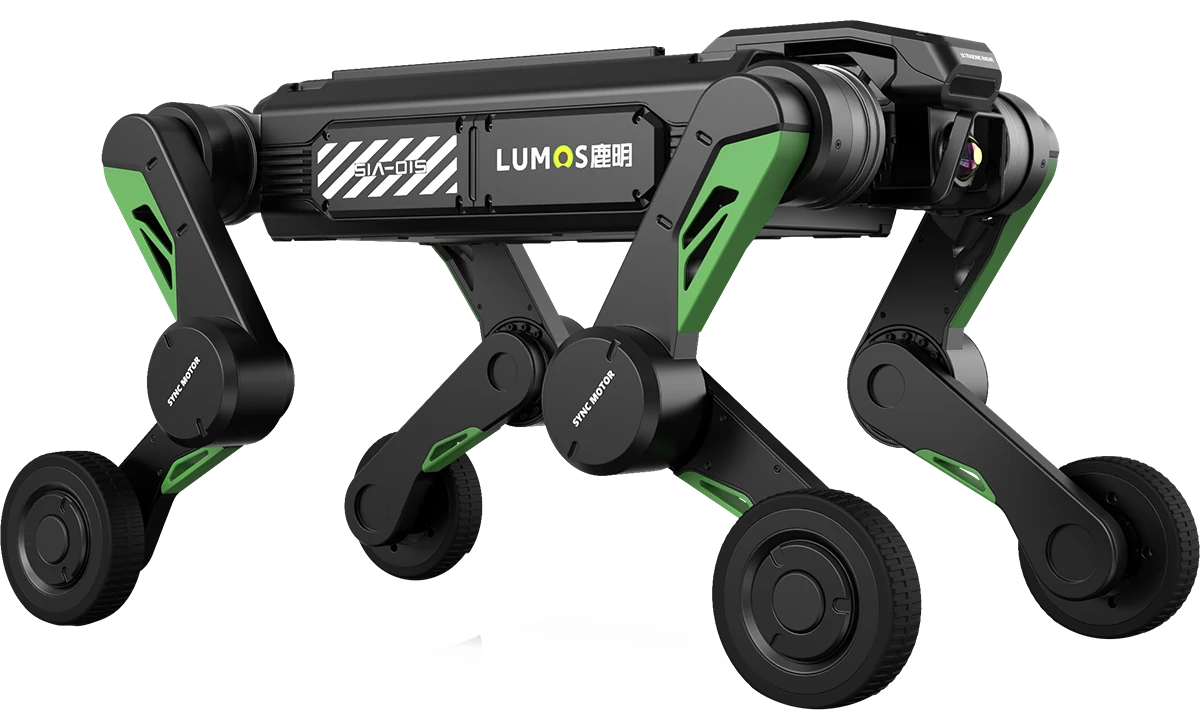
Built around complex-terrain mobility, industrial inspection, and payload-bearing tasks to deliver wheeled-legged robotics capability for real deployment environments.
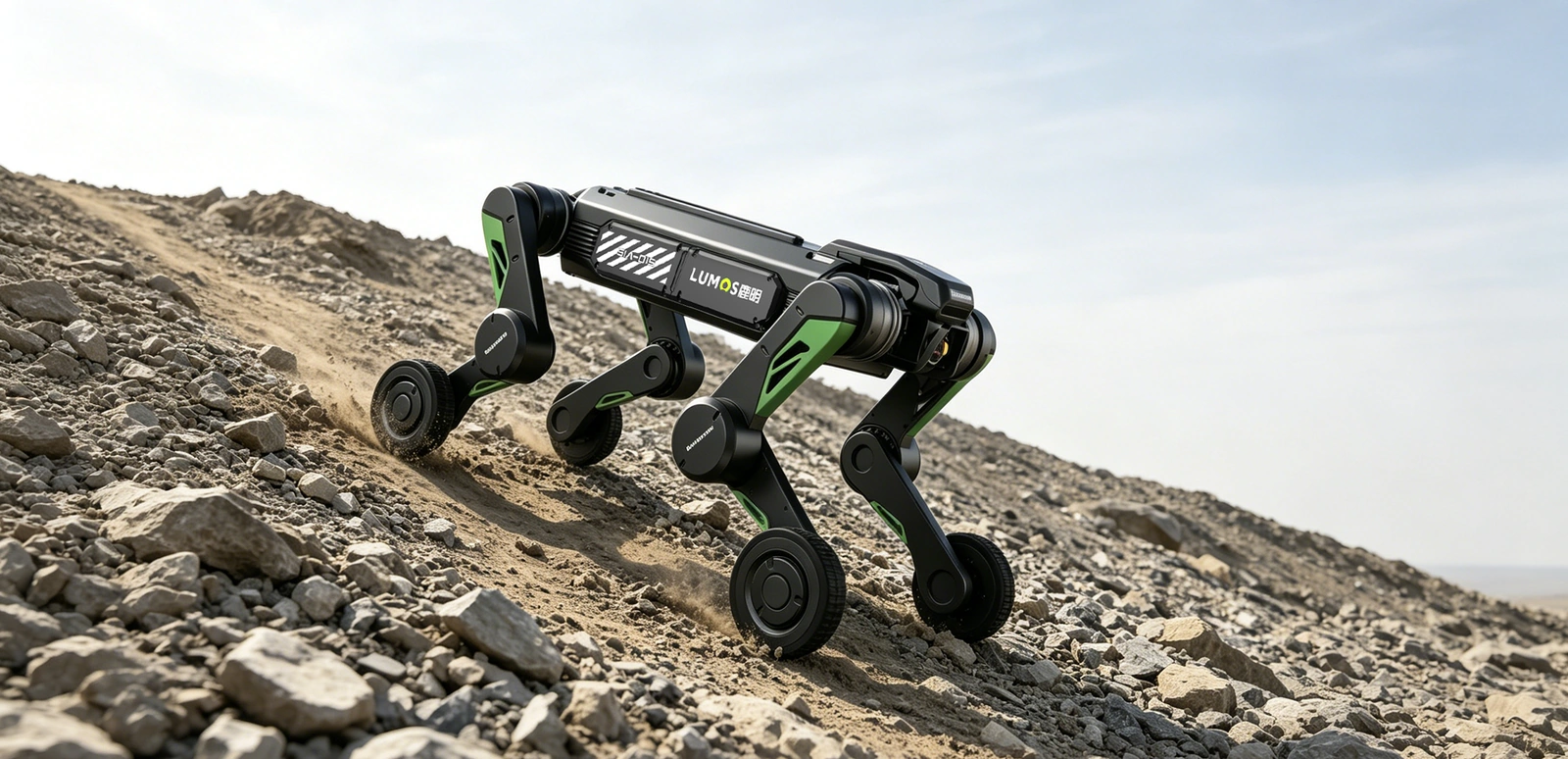
Supports continuous inspection work in factories, campuses, and infrastructure environments using wheeled-legged mobility, stable payload, and multimodal sensing.

A full-stack industrial embodied AI capability system built on three integrated pillars: scenario resources, data and model capabilities, and hardware infrastructure.